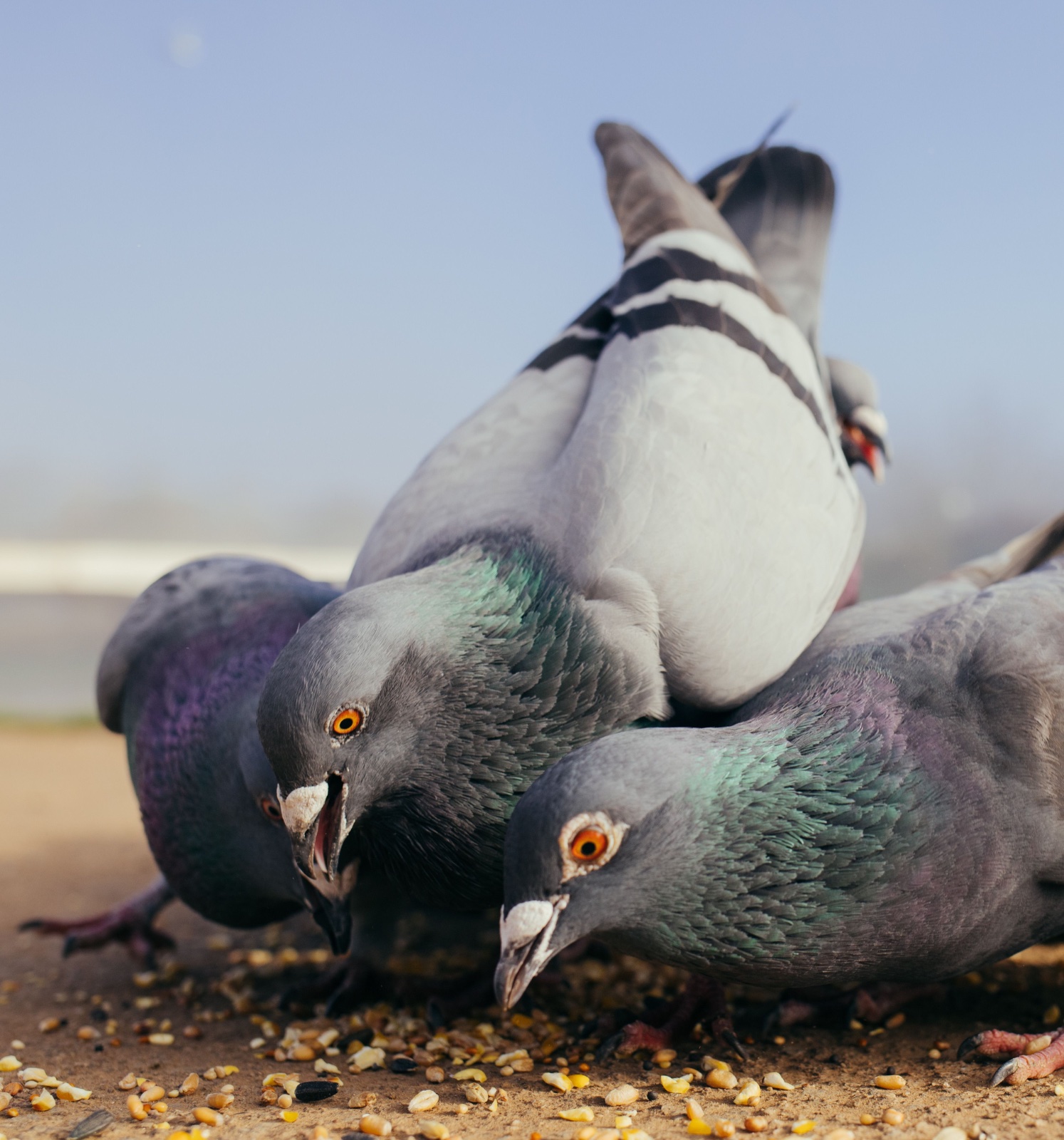
Watch a pigeon in a city square and you might see it inspect a dropped french fry, pass up a wrapper, and hurry toward a few scattered seeds. The bird is an expert at finding a meal where people live. But the food it finds is not always the food that serves it best.
For the rock pigeons most of us see on sidewalks, seeds and grains are the heart of the diet. They also eat fruit and, occasionally, small invertebrates. City life adds discarded human food to the menu. Here is what they actually eat, what their chicks need, and how to help without turning a sidewalk into a buffet. [1, 2]
“A pigeon can survive on city scraps. That doesn’t make scraps its best meal.
What do pigeons eat in the wild?

Rock pigeons forage on the ground for seeds and grains, as well as some fruit. Cornell Lab of Ornithology describes invertebrates as a rare part of their diet. The precise mix changes with what is available: a bird near farmland has different choices from one under a café table. [1]
“Pigeon” also covers many species with different habitats and menus. A band-tailed pigeon in a western forest, for example, eats seeds, berries, acorns, and other plant foods. This article focuses on the familiar city rock pigeon. [1, 8]
What do city pigeons eat?

City pigeons still seek seeds and grains. They also find birdseed, spilled food, and whatever people leave behind in parks, plazas, and streets. Their willingness to sample a crumb is a sign of adaptability, not proof that a steady diet of bread or fast food is good for them. [1–3]
Pigeons gather where food is easy to find, which is why a few spilled seeds can draw a crowd. Food left on the ground can also attract rodents. If you want to offer something, think about the food, the amount, and what happens after the birds leave. [2]
What can you feed pigeons?
Suitable options include plain birdseed and grains such as millet, oats, wheat, dried corn, peas, or sorghum. Pigeons may also eat small pieces of fruit and some leafy greens. Offer modest amounts, keep food fresh, and remove leftovers. A clean platform feeder can keep grain off the ground; check local rules before feeding in public places. [2, 3]
Fresh water matters, too. Use a clean shallow container, change the water regularly, and keep the feeding area tidy. If you use a feeder, clean it about every two weeks and more often when it is wet or heavily used. Discard damp or moldy seed. [3, 7]
Feeding is optional. You can enjoy watching pigeons forage without giving them anything, and that leaves them room to find food throughout their neighborhood.
Can pigeons eat bread?
A few crumbs are unlikely to poison a pigeon. Bread simply offers little of the nutrition it needs, so it is a poor choice to hand out regularly. Moldy bread is especially risky. If you want to feed a pigeon, choose seeds or grains instead of your sandwich crust. [3, 4]
Skip salty or seasoned leftovers, chocolate, avocado, and spoiled food. These are unsuitable or potentially harmful to birds. The sensible rule is simple: food prepared for people is usually a worse choice than plain food selected for birds. [3, 4]
What do baby pigeons eat?
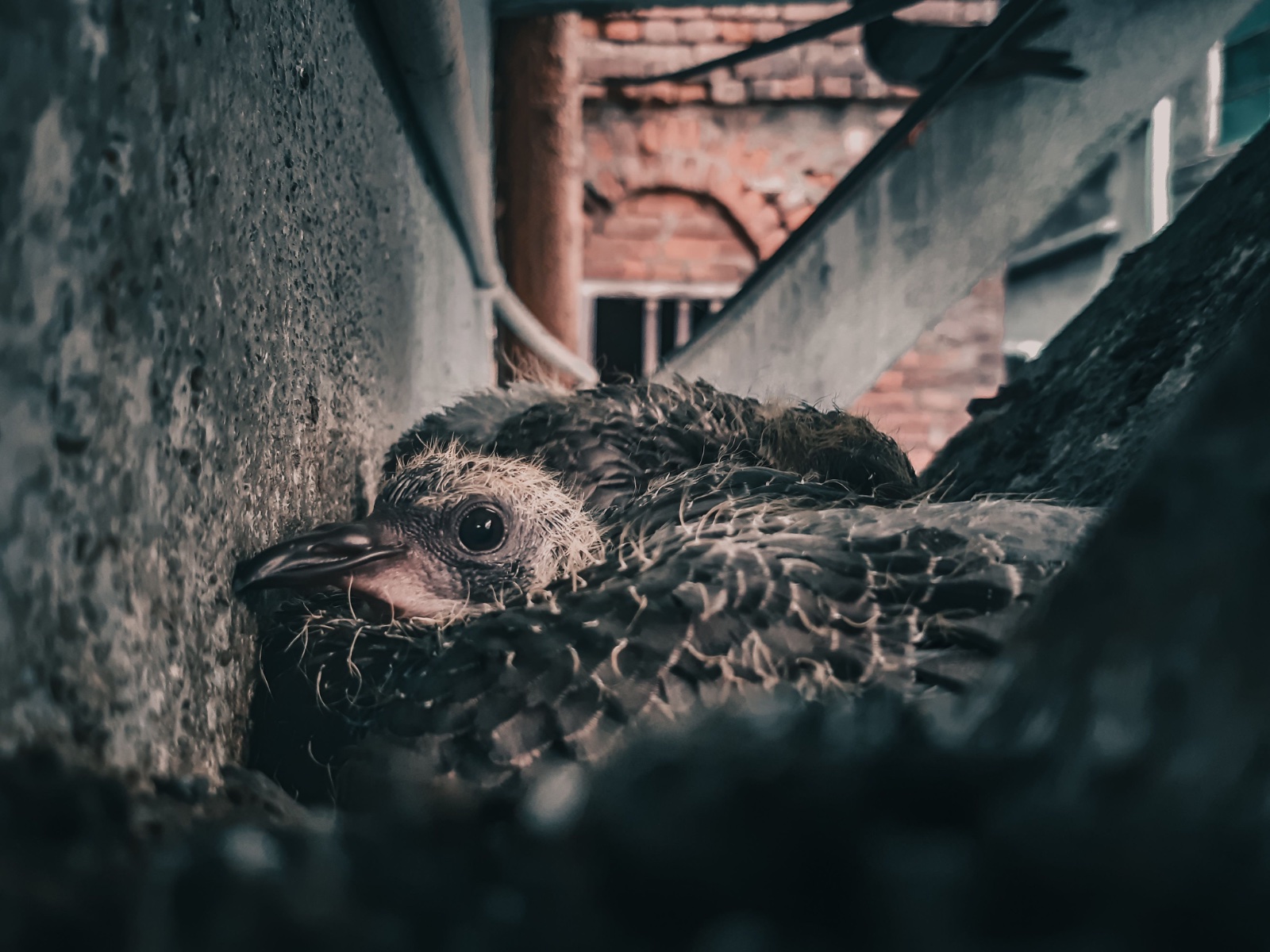
The first meals come from their parents. Both adults produce crop milk, a rich substance from the lining of a pouch in the throat, and bring it up to feed their chicks. As the young grow, their diet gradually includes other food. A newly hatched pigeon is not ready for a handful of dry seed. [1, 3]
If you find a baby pigeon on the ground, watch from a distance and seek advice from a wildlife rehabilitator if it is injured or its parents are absent. Do not try to feed it bread, seed, or water by mouth. Feeding a young bird incorrectly can cause serious harm. [5]
Related readingWhere Are All the Baby Pigeons? →Pigeon food questions, answered
Do pigeons eat insects?
Sometimes, but rarely for rock pigeons. Seeds and other plant foods make up the more familiar part of their diet. [1]
Can pigeons eat rice?
Yes. The old claim that uncooked rice makes birds’ stomachs explode is a myth. That does not make scattering rice a good feeding plan: leftover food can attract rodents, and a varied, suitable diet matters more than one grain. [2, 6]
Should you feed pigeons every day?
You do not need to. If you choose to feed them, offer small amounts of appropriate food, keep the site clean, and follow local rules. Pigeons can also forage without a daily handout from you. [2–4]
The better way to notice a pigeon
A pigeon’s next meal may be a seed beneath a tree, grain beneath a feeder, or somebody’s discarded lunch. Watching what it chooses tells you something about the bird—and about the environment people have made for it. A little care with food and litter can make that shared space better for everyone.