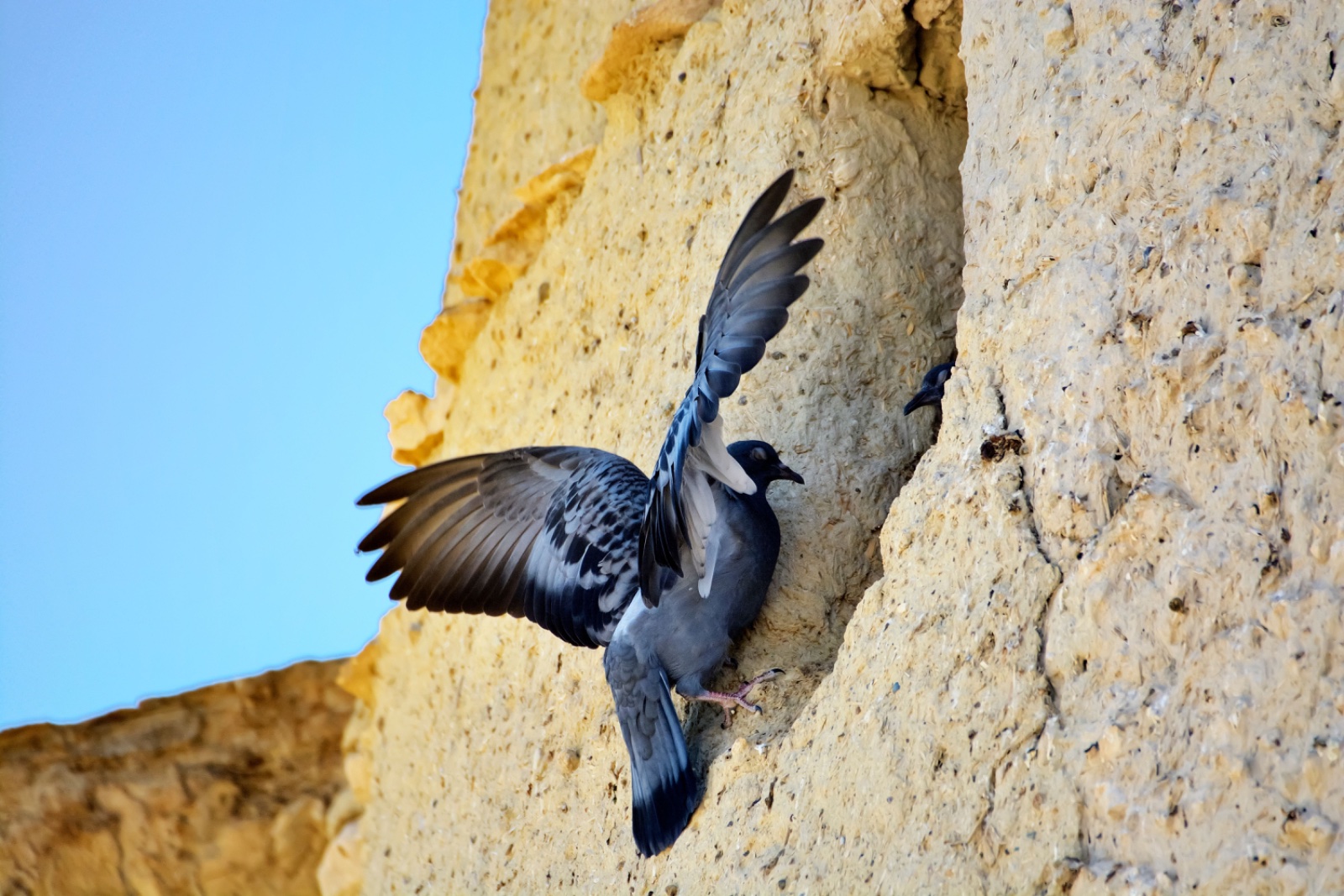
A pigeon has moved into your balcony planter. Or maybe you’ve noticed the same bird sitting beneath an overhang every morning. Is that a pigeon nest—and what should you do about it?
Start by giving the birds space. A nest with eggs or chicks is a working nursery, even if it looks like someone dropped six twigs and called it architecture. You can usually watch it safely from a distance, let the family finish raising its young, and make changes to the space afterward if you need to. [1, 2, 3]
“If a pigeon built a nest on your balcony, your home is now part of the neighborhood nursery.
Where do pigeons build nests?
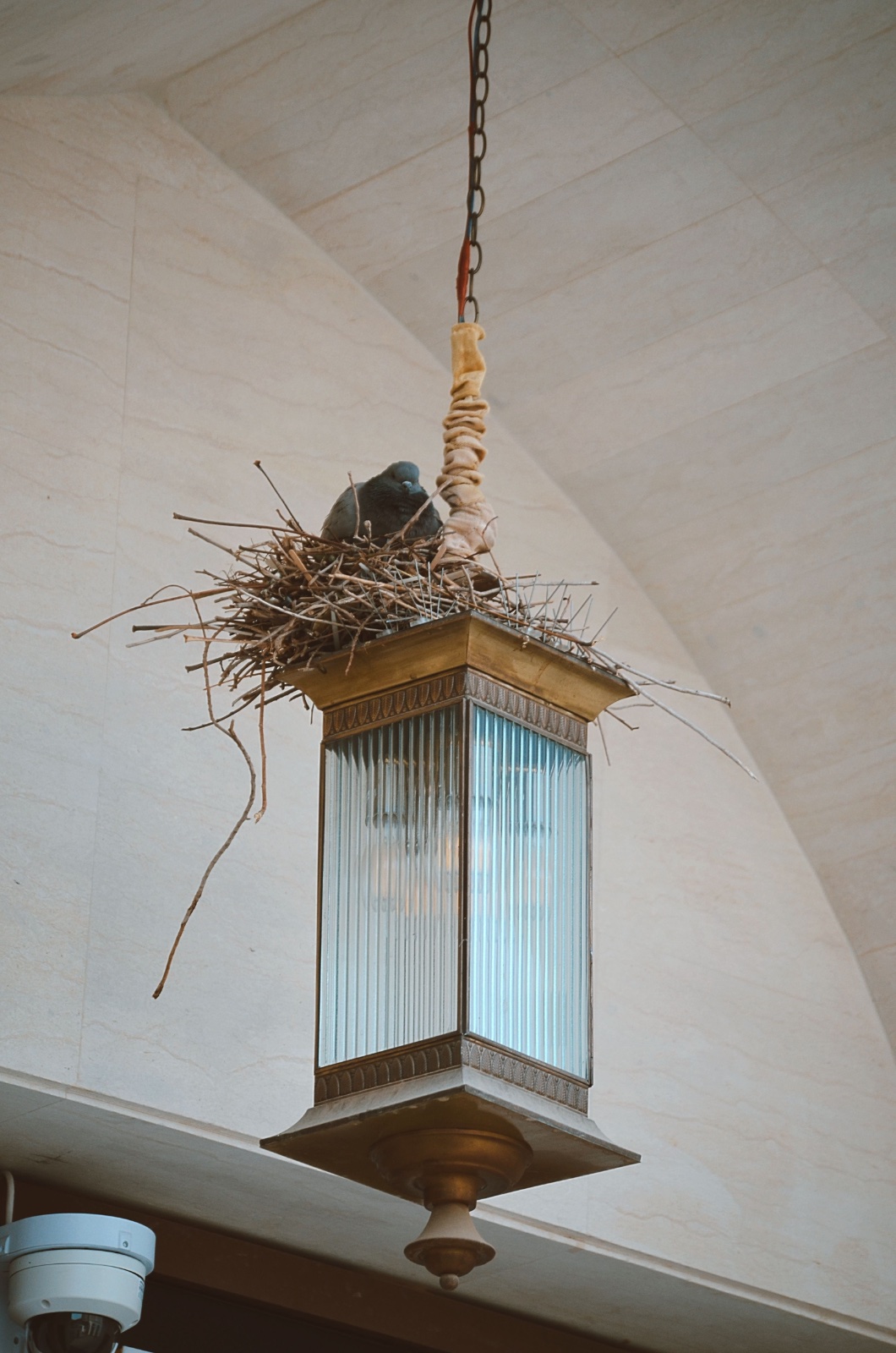
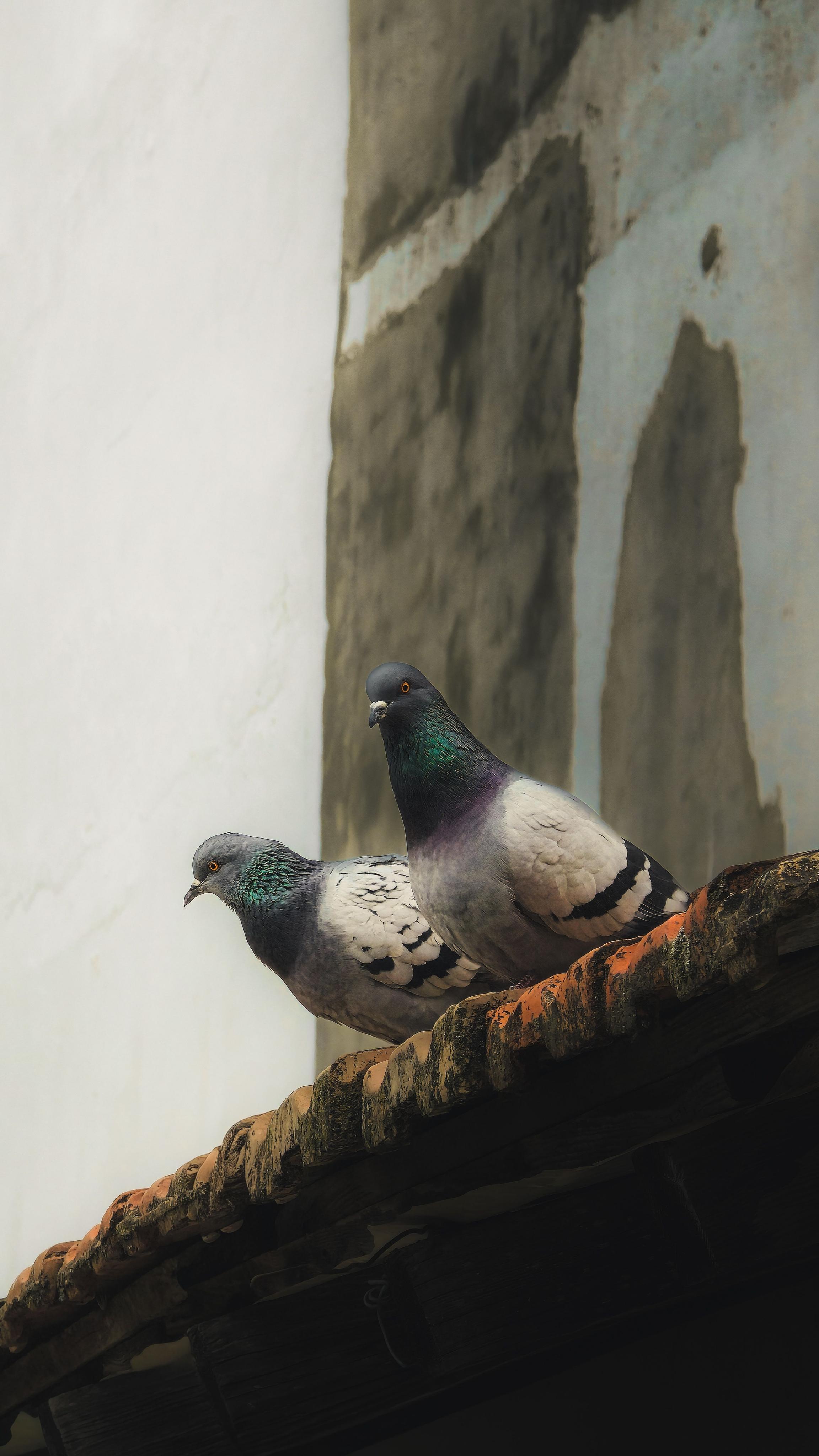
Rock pigeons originally nested on cliffs. In cities, they find similar sheltered spots on window ledges, under eaves, beneath bridges, in gutters, on balconies, and inside quiet corners of buildings. A male often chooses a site and coos to attract a mate; then he brings material while the female arranges the nest. [1]
To find a pigeon nest, watch from a distance for an adult repeatedly visiting the same sheltered spot or carrying a twig toward it. Listen for cooing, too. You do not need to climb, move anything, or lean over a ledge to solve the mystery. [1, 4]
What does a pigeon nest look like?
A pigeon nest is often a shallow platform of sticks, stems, and straw. It may look flimsy at first. Pigeons can reuse a nest and add material over time, so an older one may look much more substantial than a brand-new one. [1]
A pigeon sitting on a nest does not automatically mean something is wrong. Both parents help incubate the eggs: Cornell Lab of Ornithology describes the male’s turn from mid-morning to late afternoon and the female’s turn through the night. If you see one parent leave, the other may take over. [1]
What do pigeon nest eggs look like?
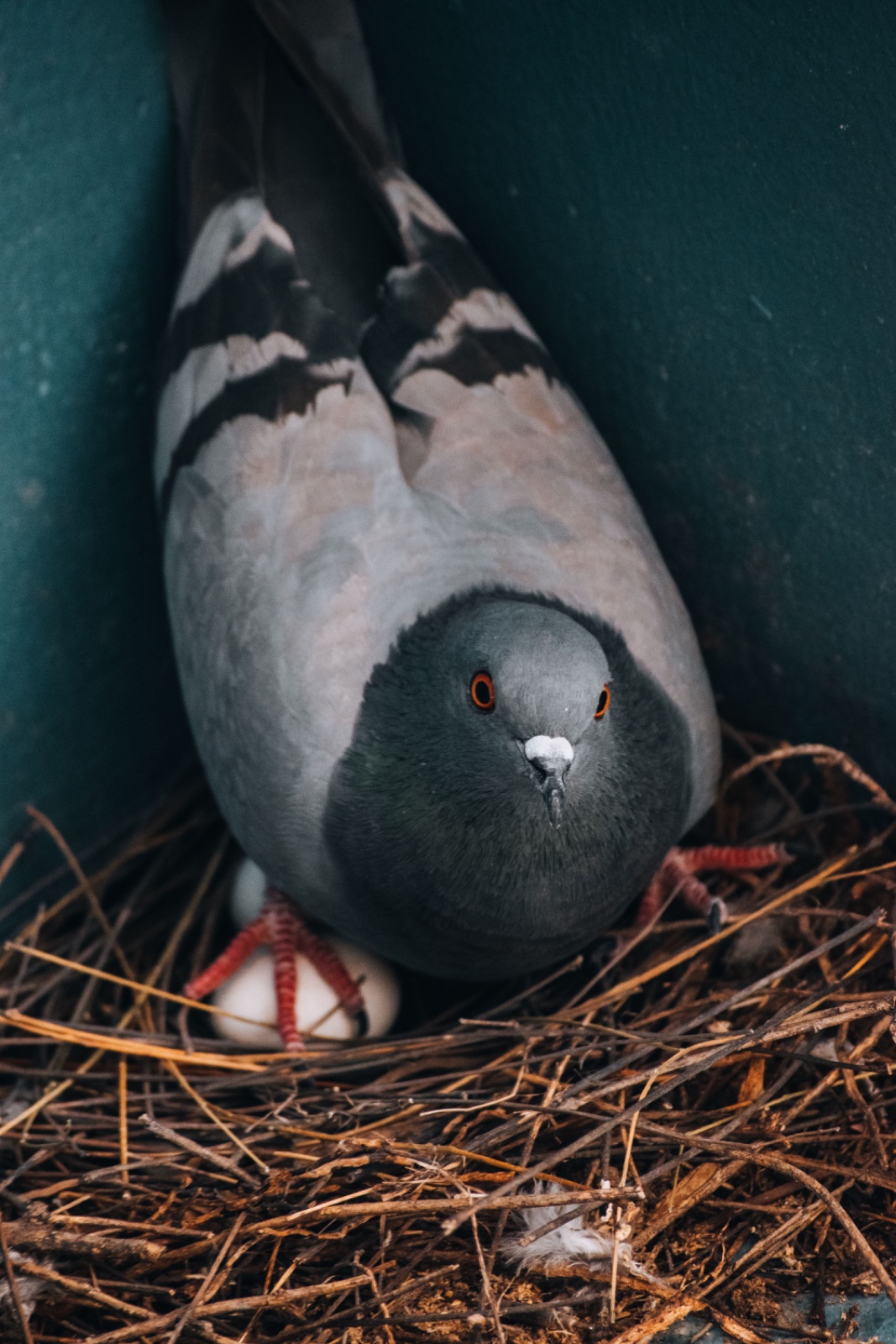
Rock pigeon eggs are white. A pair usually lays two, though a nest can hold one and Cornell records an occasional clutch of three. The second egg commonly arrives within 24–48 hours of the first. Both parents incubate them for about 18 days. [1, 5]
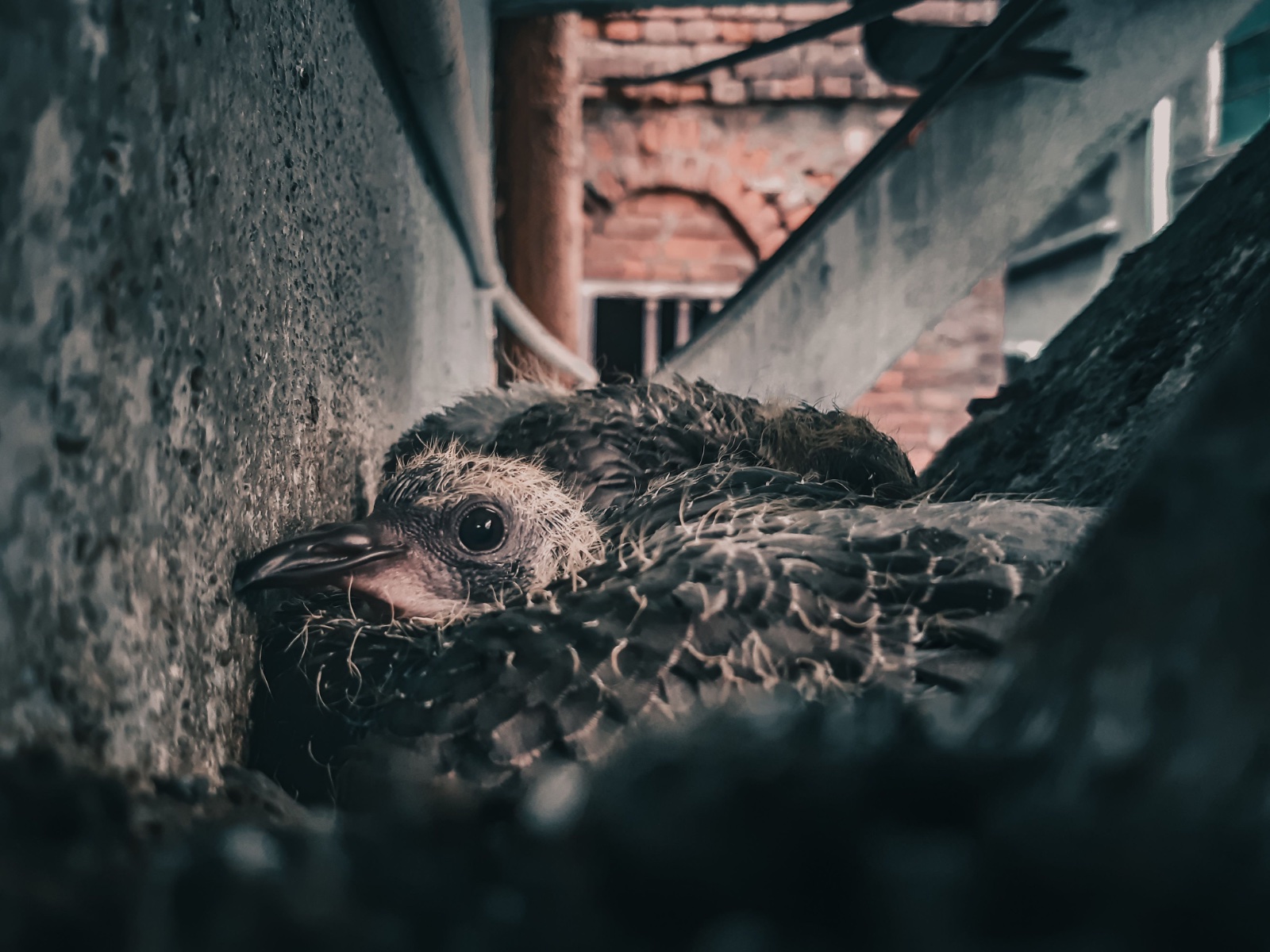
After hatching, the squabs remain in the nest for roughly 25–32 days. Those numbers explain why a nest with eggs or chicks may be an inconvenience for several weeks—and why patience usually gives the family time to finish. [1]
How should you handle a pigeon nest you find?
If it has eggs or chicks, give it room
Avoid touching the eggs, shifting the nest, repeatedly peering into it, or crowding the parents for a photo. Watch from indoors or another comfortable distance, and keep pets away from the nesting area. Close observation can stress birds and may draw predators’ attention to the nest. [2, 4]
If the nest blocks an essential doorway, sits near machinery, or creates another immediate hazard, ask a local wildlife rehabilitator or animal services agency for advice before taking action. Moving a nest can damage it or prevent the parents from continuing to care for the young. [2]
After the nest is inactive, decide what comes next
Once you have confirmed that no viable eggs or live chicks remain and the birds are no longer using the nest, you can clean the area and decide whether to allow another family or prevent future nesting there. Pigeons may reuse the same spot, so make any changes before a new nest becomes active. [1, 3]
For an unwanted balcony or ledge nest, remove food scraps that attract pigeons and consider a well-maintained, bird-safe barrier or another humane way to block access. Poorly installed netting can trap birds, and sticky repellent gels can injure them. [3, 6]
Is it legal to move a pigeon nest?
Rules depend on the bird and where you live. In the United States, federal protections for native birds differ from those for introduced feral rock pigeons; state and local rules may also apply. Other pigeons and doves can have different protections. Identify the species and check with your local wildlife agency before moving a nest, its eggs, or its young. Leaving an active nest in place is generally the gentlest choice when it is safe to do so. [2, 7]
How do you clean up after a nest?
Wait until the nest is truly inactive. For a small cleanup, wear disposable gloves, dampen the droppings before wiping them up, and wash your hands afterward. Do not sweep or vacuum the material dry. If the buildup is heavy or dusty, consider a well-fitting N95 respirator or professional help; people with weakened immune systems should avoid cleaning it themselves. [8, 9]
Human illnesses associated with pigeon droppings—including histoplasmosis, cryptococcosis, and psittacosis—are rare. The main concern during cleanup is breathing contaminated dust; a small amount on a windowsill does not pose a serious health risk to most people. [9]
Pigeon nest questions, answered
How can I tell if a pigeon nest is active?
Watch from a distance for a parent sitting on it, carrying material, or returning to feed chicks. Do not assume a nest is empty just because an adult steps away. [1, 4]
How many eggs are in a pigeon nest?
Usually two white eggs, although a rock pigeon nest can have one or occasionally three. [1, 5]
Can I move a pigeon nest with eggs?
Leave it in place when it is safe to do so. If the location poses an urgent problem, identify the species and ask a local wildlife professional about a safe, lawful response. [2, 7]
Do pigeons reuse their nests?
Yes. Rock pigeons may return to the same nest and add new material. [1]