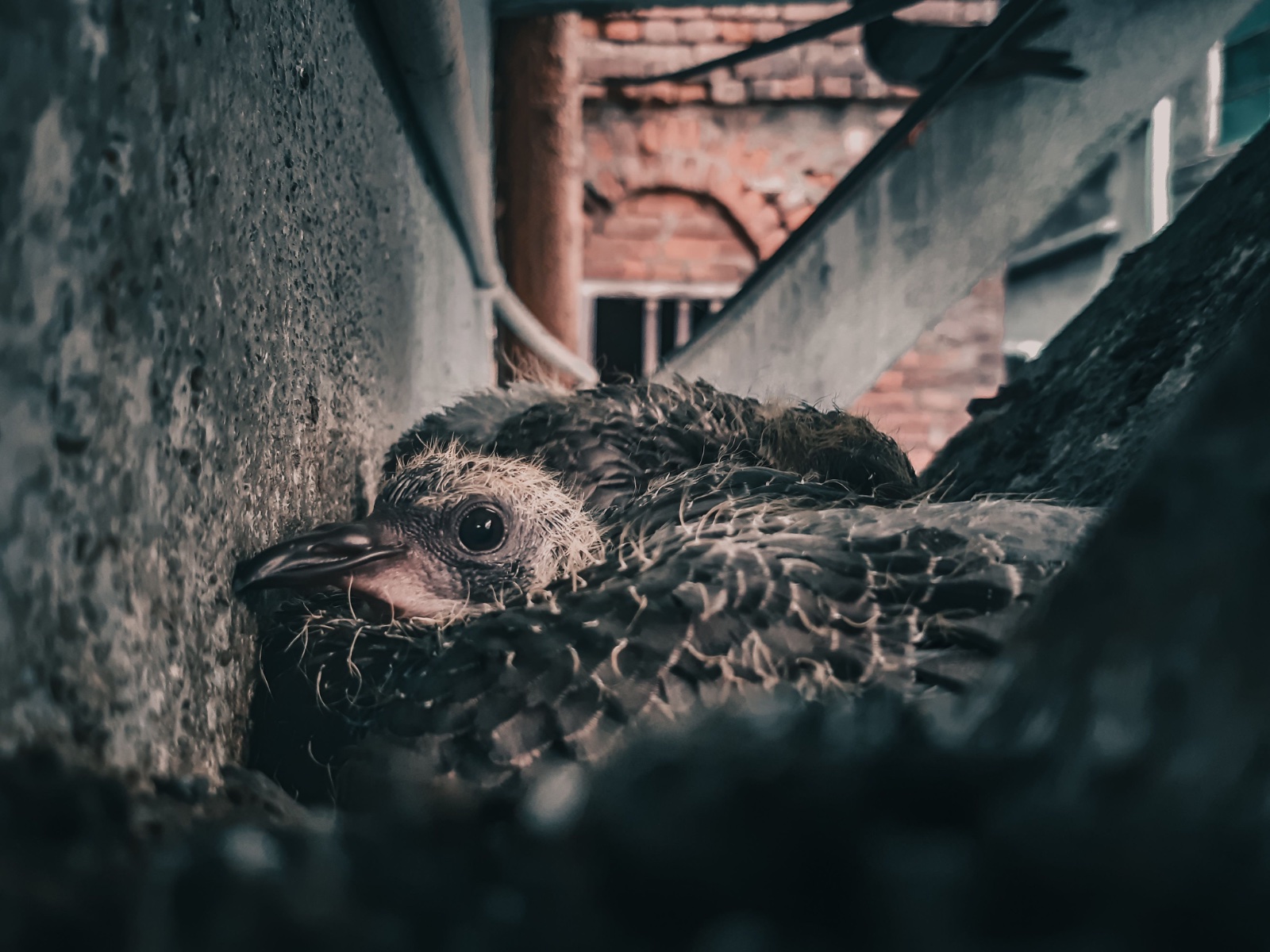
You’ve seen pigeons on sidewalks, rooftops, and park benches. You’ve seen pigeons confidently approach someone holding a sandwich. But when did you last see a baby pigeon?
The babies are there. They spend their early lives tucked away in nests, then make their public debut looking surprisingly grown up. The pigeons you pass every day may include more youngsters than you think. [1, 2]
“Baby pigeons exist. They’re just excellent at skipping the awkward public baby phase.
Where do pigeons hide their babies?
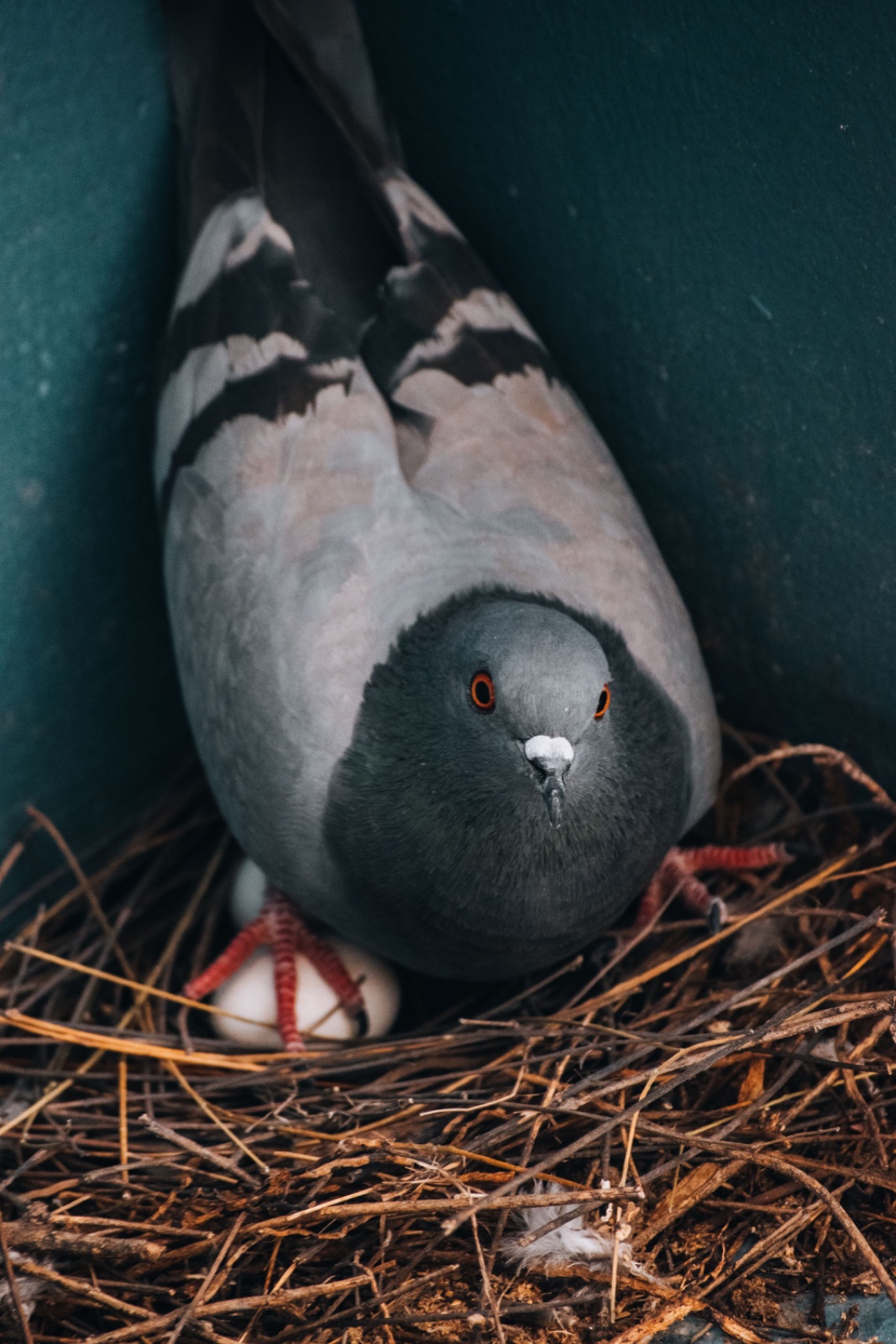
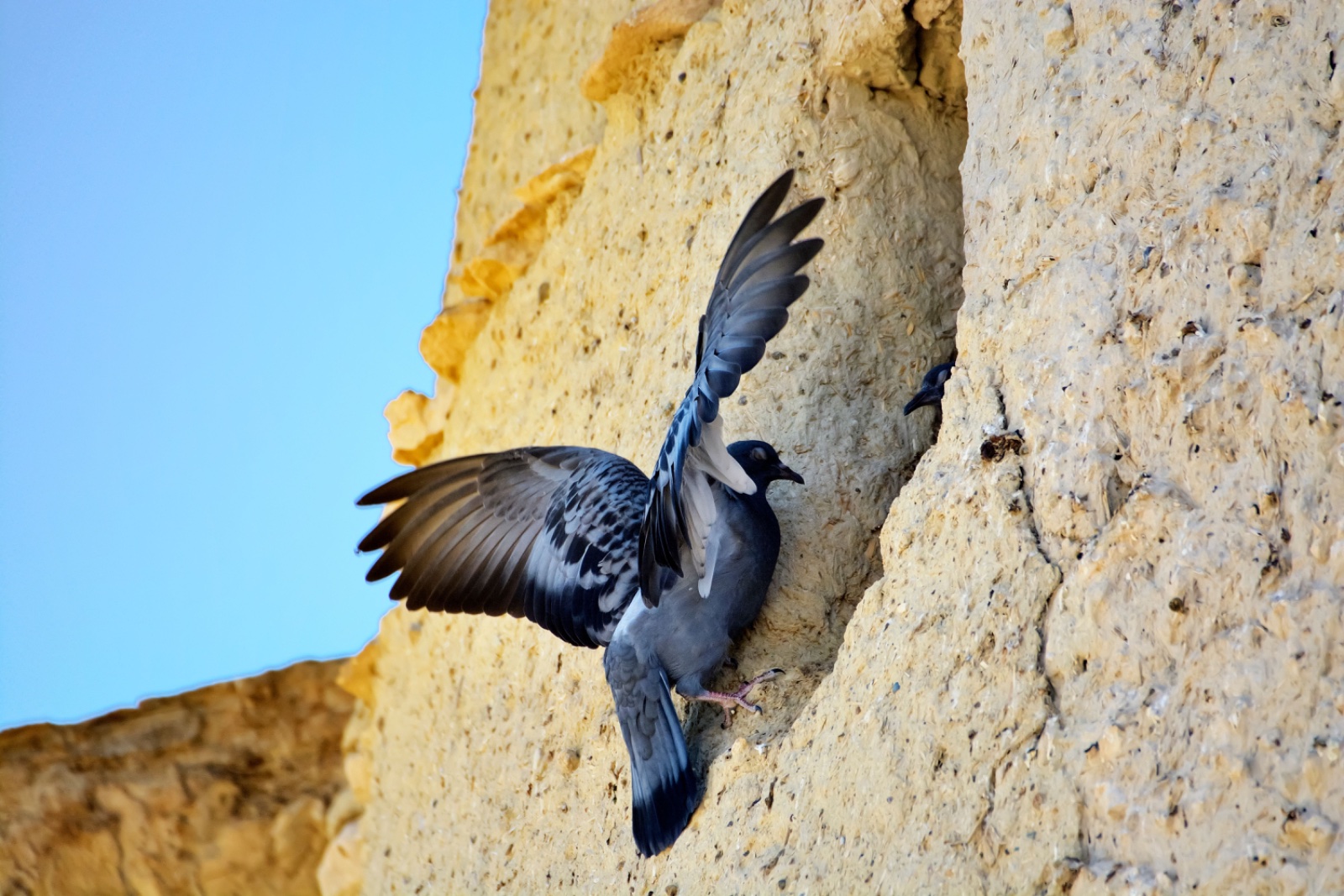
The city’s rock pigeons descend from birds that nested on cliffs. Buildings offer familiar-looking substitutes: ledges, overhangs, gutters, and sheltered corners. Pigeons also nest beneath bridges and in places most of us never think to look. [1, 2]
So while you scan the sidewalk for tiny pigeons, the chicks may be growing up above a storefront or inside a quiet nook of a building.
The nest itself probably won’t win a home-design award. A male pigeon brings sticks and stems; the female arranges them into a loose platform. Pigeons may return to the same site and add more material over time. It works for them. [1]
What does a baby pigeon look like?
A newly hatched baby pigeon, called a squab, looks nothing like the polished, strutting bird at your feet. It hatches helpless, with sparse yellow or white down, and depends on its parents for warmth and food. [1, 4]
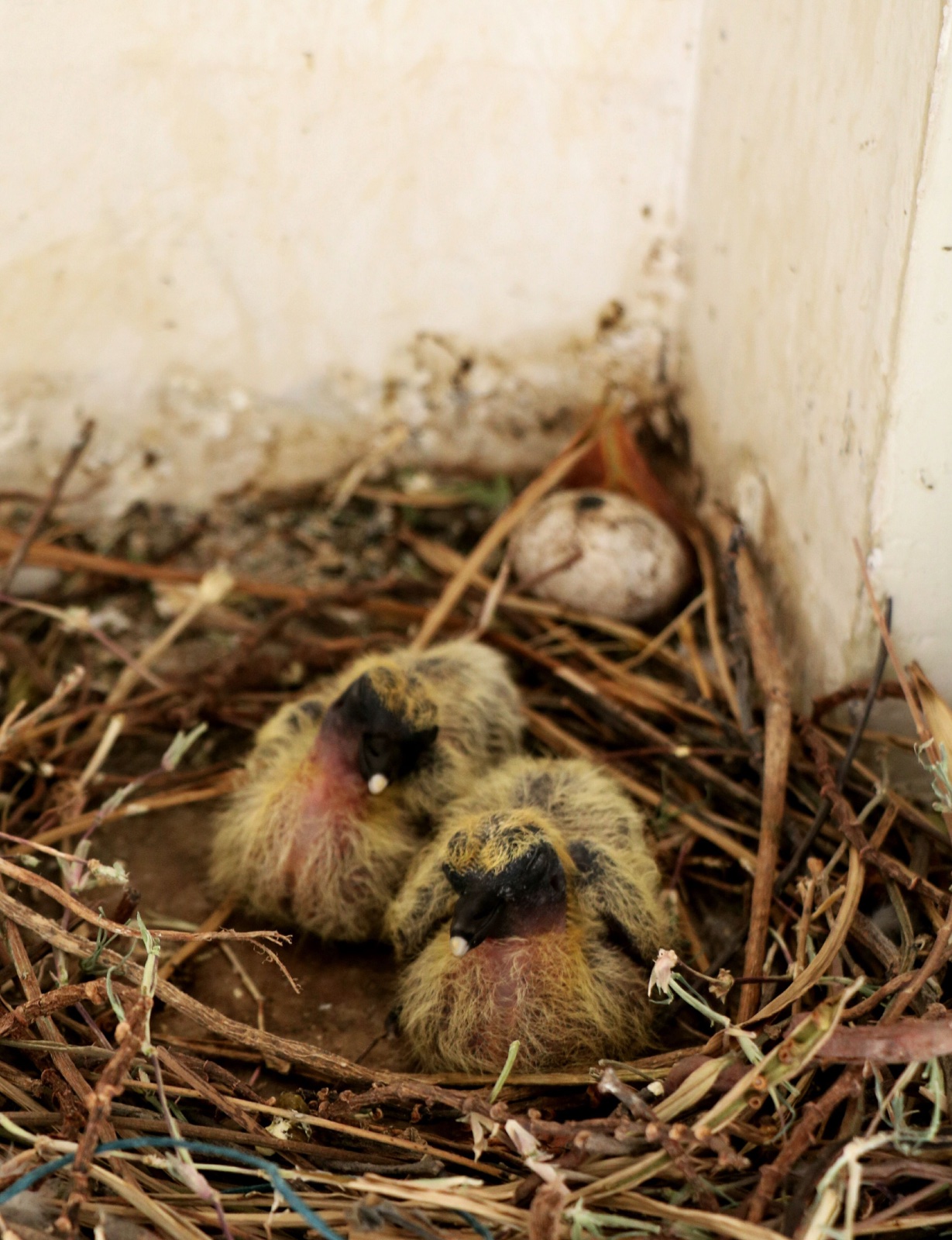
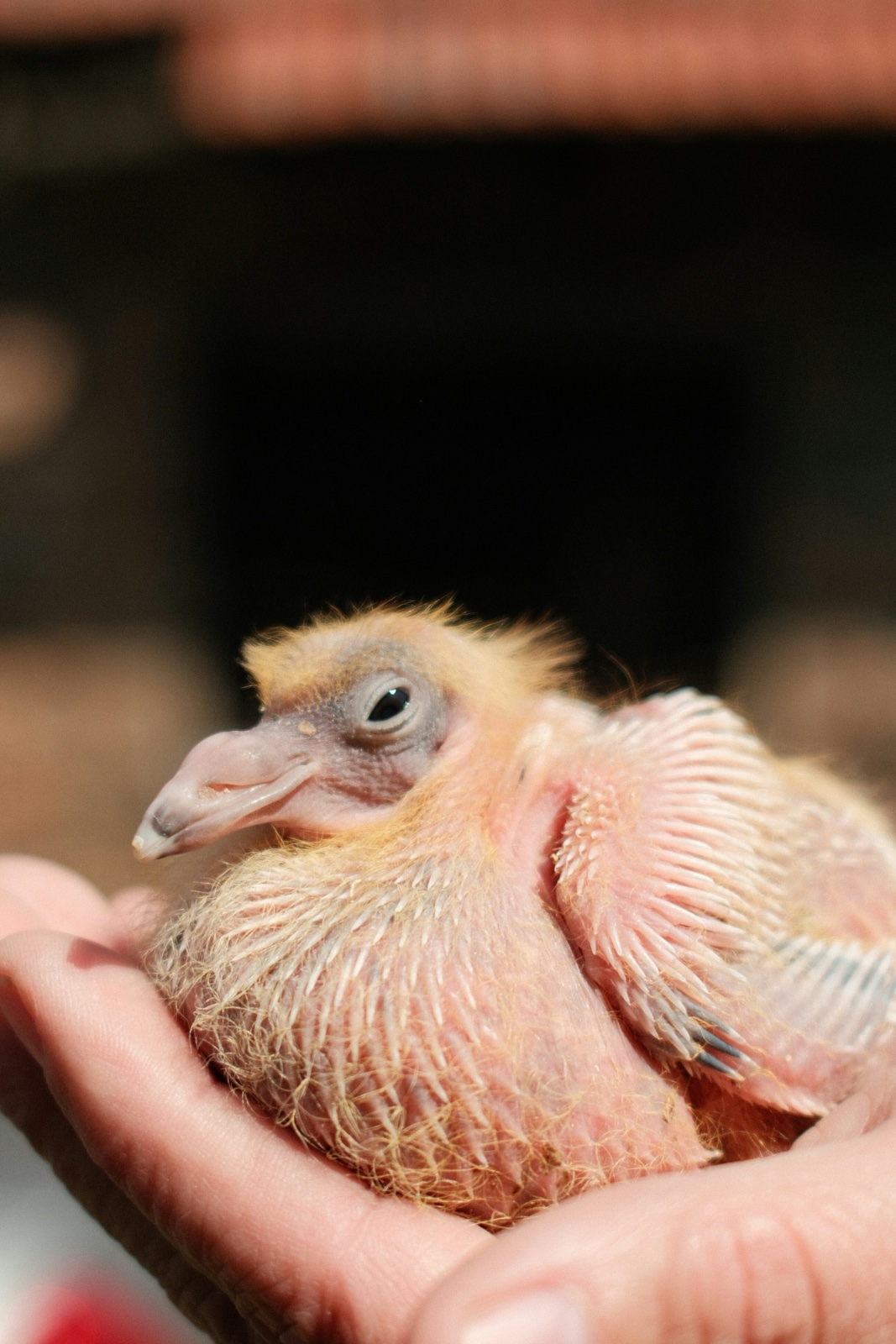
Pigeon parents usually lay two white eggs, with the second arriving about 24–48 hours after the first. Both adults incubate the eggs for about 18 days. Cornell Lab of Ornithology describes the male’s daytime shift and the female’s shift from late afternoon through the night. So yes, two baby pigeons commonly share a nest. [1, 4]
Wait—pigeons make milk?
They do, in a manner of speaking. Both parents produce crop milk, a rich substance formed in a pouch in the throat called the crop. They bring it up through their beaks to feed their squabs, which put their beaks into the parents’ mouths to receive it. As the chicks grow, the parents gradually introduce other food. Crop milk isn’t mammal milk, but it gives young pigeons a remarkable start in life. [1, 3, 5]
The next time you see two pigeons taking turns at a nest, you may be watching a shared parenting shift.
Why are there no baby pigeons on the sidewalk?
Pigeon chicks stay in the nest while they grow. Rock pigeons spend about 25–32 days there after hatching. By the time they leave, they have feathers and are close to adult size. Unlike a duckling that toddles behind its mother, a young pigeon can step into public life looking a lot like the rest of the flock. [1, 2]
That’s the answer to the mystery: baby pigeons are hidden while they look unmistakably like babies. Once you can easily spot them, they no longer look very babyish.
Can you spot a young pigeon?
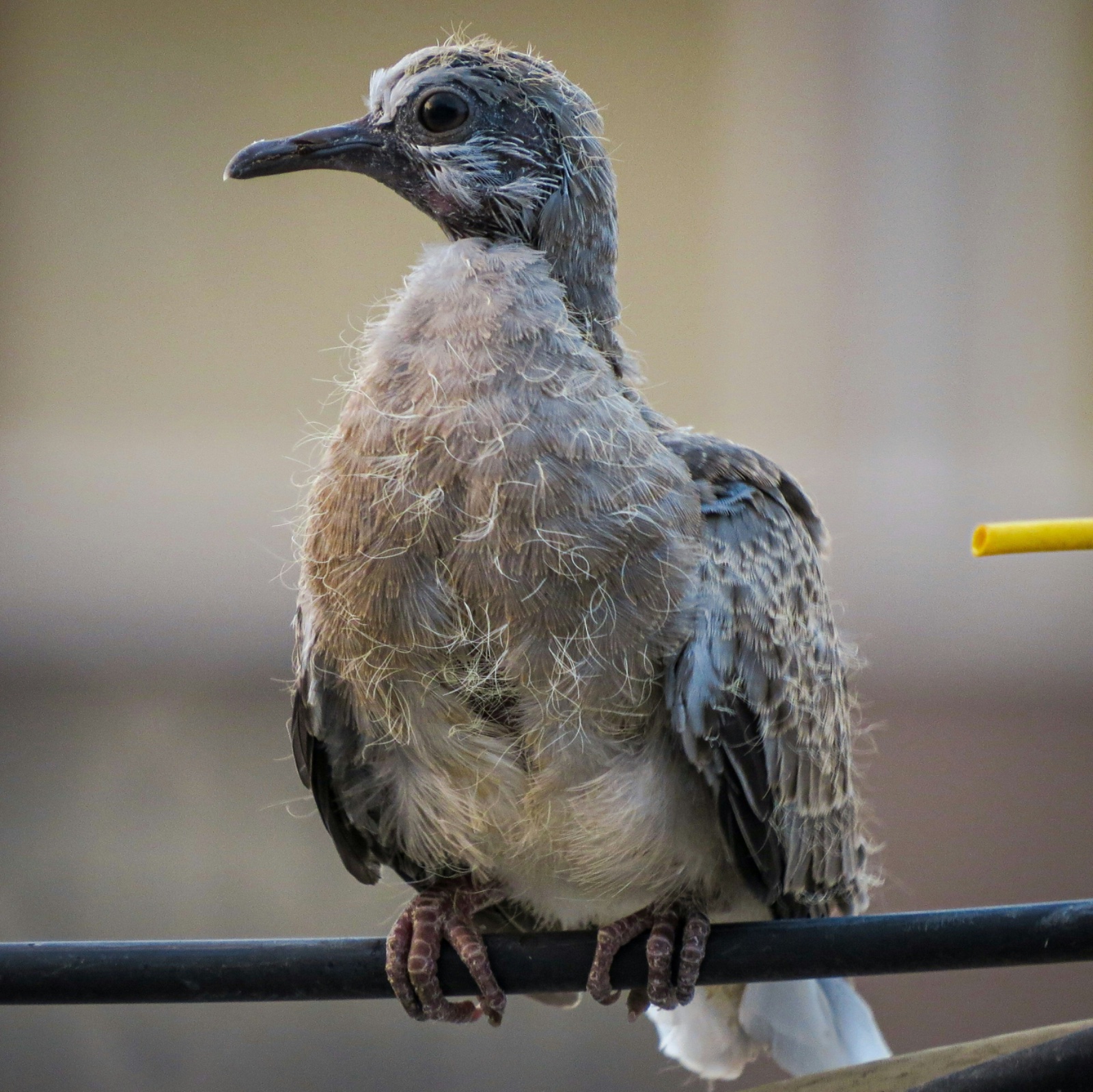
Sometimes. Look for a bird that seems less sure of itself than the experienced sidewalk strutters, or watch for a young bird staying close to an adult and asking for food. Those are clues, rather than a sure way to tell a pigeon’s age. Audubon notes that newly fledged rock pigeons already look much like their parents. [2]
The most rewarding way to find a pigeon family is to watch from a comfortable distance. Notice where an adult repeatedly flies with nesting material or disappears into a sheltered spot. You may discover that your neighborhood has had a nursery overhead all along.
What should you do if you find a baby pigeon?
Start by observing from a distance. A feathered young bird may have recently left the nest, and its parents may still be nearby. A nearly bare chick on the ground needs a different response. If you find a nestling and can safely identify its nest, you may be able to return it; if the bird appears injured or you cannot resolve the situation, contact a wildlife rehabilitator for guidance. Don’t try to raise it yourself. [6]
Baby pigeon questions, answered
Why are there no baby pigeons?
There are plenty of baby pigeons. They spend their first weeks in sheltered nests and look much like adults by the time they leave. [1, 2]
Where are all the baby pigeons?
Look up, not down. City pigeons often nest on building ledges, beneath overhangs and bridges, and in other sheltered spaces. Give active nests plenty of room. [1]
Are there normally two baby pigeons in a nest?
Usually, yes. Rock pigeons typically lay two eggs, though some nests have only one. [4]
How long does a pigeon egg take to hatch?
Both parents incubate the eggs for about 18 days. [1, 4]
What is a baby pigeon called?
A baby pigeon is called a squab. [3]
How long do baby pigeons stay in the nest?
Rock pigeons typically spend 25–32 days in the nest after hatching. [1]