Picture a dove and you may see a graceful bird in a peaceful scene. Picture a pigeon and you may see one hustling across a sidewalk. They seem like different kinds of birds, but the names tell us more about our habits than about the birds themselves.
The short answer: doves and pigeons belong to the same bird family, Columbidae. There is no scientific rule that separates a “dove” from a “pigeon.” The 2025 eBird/Clements checklist counted 353 species in that family. Those species are not all the same bird, even when their common names overlap. [1, 2]
Related readingFive Types of Pigeons You Should Know →“A dove and a pigeon can be different species, but the words themselves are not a scientific dividing line.
Why do some get called doves and others pigeons?
People often use “dove” for a smaller, slimmer-looking species and “pigeon” for a larger, sturdier one. That is a tendency, not a test. Names also reflect history, place, and culture. You cannot identify a bird’s species by deciding that it looks too big to be a dove or too delicate to be a pigeon. [1]
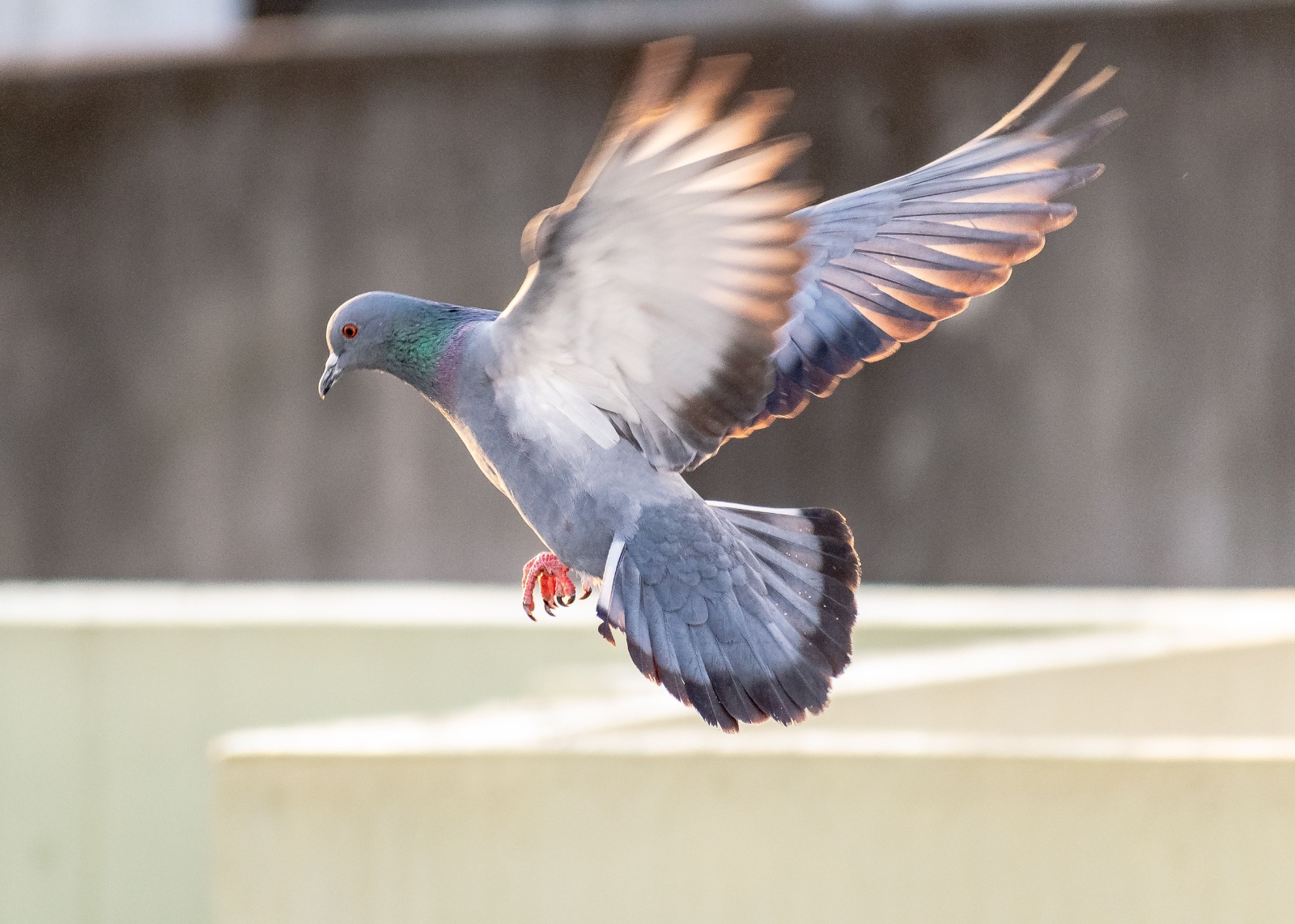
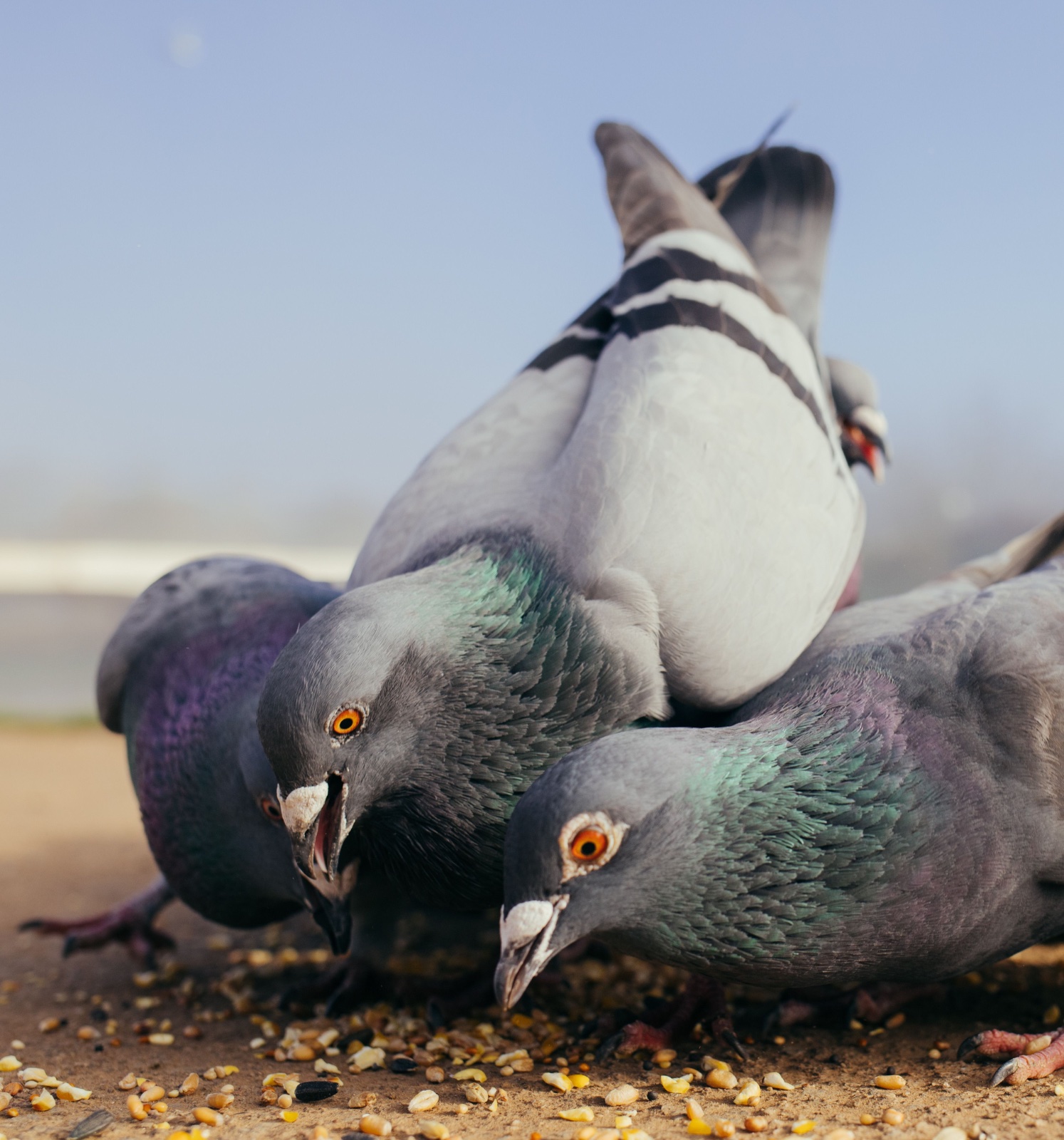
The most revealing example is the bird in the city square. “Rock pigeon” and “rock dove” are names used for Columba livia; feral city pigeons descend from domesticated birds of that species. Some of those pigeons are blue-gray, while others are rusty, dark, patterned, or almost white. A change in color does not turn one into a different species. [1, 3]
A city pigeon and a mourning dove are different species
 Rock pigeon · Columba livia
 Mourning dove · Zenaida macroura
The names may be flexible, but individual species are real. In much of North America, two birds people compare are the rock pigeon (Columba livia) and the mourning dove (Zenaida macroura). The rock pigeon is generally larger and plumper. Many have a blue-gray body, two dark wing bars, and a relatively short, broad-looking tail, although domestic ancestry has produced many feather colors. [3, 4]
A mourning dove is usually smaller and slimmer, with soft tan coloring, dark spots on the wings, and a long pointed tail edged with pale tips. Its wings can make a whistle as it takes off. These are useful clues for telling those two species apart. They are not a universal checklist for every pigeon and dove in the world. [4, 5]
What do pigeons and doves have in common?
Beyond their family connection, these birds share some remarkable traits. In pigeons and doves, both parents produce a nutritious substance called crop milk to feed newly hatched chicks. It is made in the crop, part of the bird’s digestive tract; it is not mammalian milk. Pigeons and doves can also drink by drawing water up without tipping their heads back after every sip. [6, 7]
Related reading10 Quick Facts About Pigeons →Their varied lives show why the family is more interesting than a single city stereotype. Some species forage on sidewalks, some live in woodlands, and others are at home on islands. The species name and the bird’s field marks tell you more than the everyday label alone. [1, 3, 5]
Dove and pigeon questions, answered
Are doves female pigeons?
No. “Dove” is a common name for certain species, not a word for a female pigeon. Male and female birds can belong to a species called a dove or one called a pigeon. [1]
Is a white dove always a different bird from a city pigeon?
No. Rock pigeons can have nearly all-white plumage. Color alone does not tell you the species, so a white bird needs the same careful identification as a gray one. [3, 4]
Are a rock pigeon and a mourning dove the same species?
No. The rock pigeon is Columba livia; the mourning dove is Zenaida macroura. They are relatives in Columbidae, with different shapes, markings, and scientific names. [3–5]
Look at the bird, not just the label
A dove is not automatically gentle, and a pigeon is not automatically ordinary. Both names belong to a wonderfully varied family. The next time one lands nearby, notice its tail, wing pattern, color, size, and setting. Those details can help you discover who it actually is.